


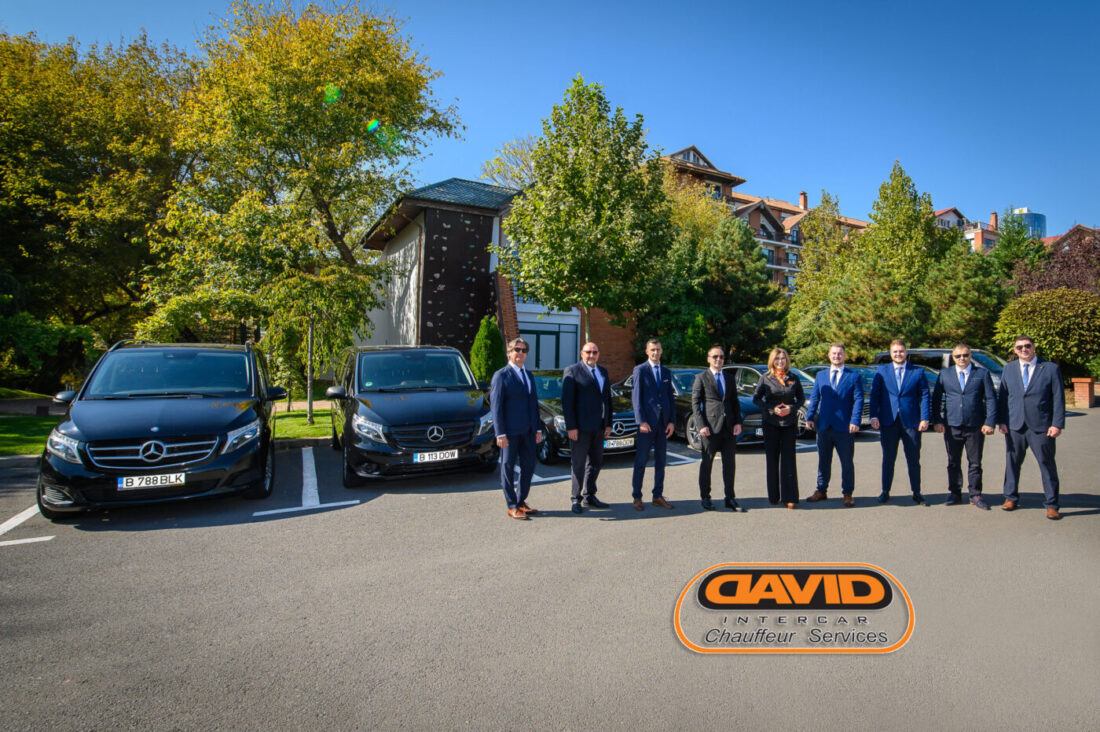
Private chauffeur or taxi? A taxi is the right answer more often than people in my business like to admit. Three kilometres, one bag, no deadline that matters — take the taxi. You’ll be there in eleven minutes and you won’t think about it again.
The line moves when the day has more than one fixed hour in it.
More than two stops changes the arithmetic
The rule we use: more than two stops in a day and a car at disposal costs less than separate rides. Fewer than two, book the rides.
It sounds anti-commercial because it often points people at the smaller option. But someone with four meetings in four parts of Bucharest pays more in separate trips than for half a day of private chauffeur services in Bucharest — and waits in between, on the pavement, in October.
The car as a place you can work
Between two meetings there are twenty-five minutes. In a taxi they are twenty-five minutes of being driven. In a car you booked, they are twenty-five minutes in which you can take a call you wouldn’t take in front of a stranger.
Discretion isn’t a line in a brochure for us; for corporate clients it is written into the contract and signed. That is the difference between a promise and an obligation.
Who is at the wheel, and how long they have been awake
We work with six drivers. Each has two consecutive days off a week — not one here and one there, two in a row, so a person actually rests. It rotates, so the free weekend doesn’t always fall to the same one. We keep it in a table where you can see at a glance who is off and how many days each has worked in a row. When that number goes past six, something is wrong and it shows immediately.
None of this is visible from the back seat. That is rather the point.
Where a taxi still wins
Short distances, unplanned trips, and the run into town from the airport for two people with hand luggage — for that last one, a fixed-price Bucharest airport taxi is the sensible booking, not a car at disposal.
A tired driver isn’t a saving. It’s a risk somebody else pays for.